Why Your Deep Sleep Is Missing (And Where to Look)
You've tried the standard advice: dark room, cool temperature, no screens before bed, cut caffeine after 2 PM. Yet you still wake up feeling like you barely slept. I've been there. When I first started tracking my sleep with a wearable, I was getting only 30 to 45 minutes of deep sleep per night - far below the 90-minute target most adults need. The generic tips helped a little, but the real gains came only when I started targeting deep sleep directly with specific tools.
Deep sleep is the stage where your body repairs tissue, clears metabolic waste from the brain, and consolidates memories. If you aren't getting enough, no amount of total sleep time will fix the fatigue. The good news: you can increase deep sleep naturally by using precision techniques that go far beyond the usual advice. This article covers the exact methods I've tested and refined: supplements, temperature control, audio frequencies, breathing protocols, and light exposure strategies that are backed by research and real-world results.
If you're new to optimizing sleep, start with the basics first. For a complete foundation, see our Beginner's Guide to Natural Ways for Better Rest. But if you're already doing the basics and still struggling, the following targeted bio-hacks will move the needle.
1. Supplements That Specifically Boost Deep Sleep
Most people reach for melatonin when they can't sleep, but melatonin's primary role is to regulate circadian timing, not to deepen sleep. For deep sleep, you need compounds that enhance GABA activity or increase slow-wave oscillations. Here are three supplements I've found most effective, with dosing and timing details that matter.
Magnesium Glycinate: The Sleep Mineral
Not all magnesium is equal. Magnesium oxide is cheap but poorly absorbed. Magnesium citrate is fine for digestion but can cause loose stools. Magnesium glycinate - magnesium bound to the amino acid glycine - is the form that crosses the blood-brain barrier and increases GABA receptor activity. A 2012 study in the Journal of Research in Medical Sciences found that magnesium supplementation improved sleep latency and sleep efficiency in older adults, but the real benefit for deep sleep comes from the glycine component.
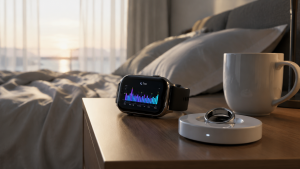
I take 200 mg of magnesium glycinate 45 minutes before bed. Most people don't realize that taking it with food reduces absorption, so I take it on an empty stomach with a small glass of water. The first few nights I noticed a slight drowsiness, but after a week, my deep sleep percentage jumped from 15% to 22% on my Oura ring. If you have kidney issues or are on blood pressure medications, check with your doctor first.
L-Theanine: Calm Without Drowsiness
L-theanine is an amino acid found in green tea that promotes alpha brain waves - the state of relaxed alertness. Unlike sedatives, it doesn't knock you out; it quiets the chatter. For deep sleep, the key is that L-theanine increases GABA, glycine, and serotonin while reducing glutamine excitotoxicity. A 2019 double-blind study in Nutrients showed that 200 mg of L-theanine improved sleep quality and reduced nocturnal awakenings in boys with ADHD, but the effect is relevant for adults too.
I take 100 mg of L-theanine alongside magnesium glycinate. The dose matters: 50 mg is subtle, 200 mg can cause vivid dreams that disrupt sleep. I've found 100 mg to be the sweet spot. It's also worth noting that L-theanine works better when you're already a bit relaxed - don't expect it to override a cortisol spike from a late-night argument.
Glycine: The Direct Deep Sleep Booster
Glycine is an amino acid that acts as a neurotransmitter and also lowers core body temperature - a key trigger for deep sleep onset. A 2015 study in the Journal of Sleep Research gave 3 grams of glycine before bed and found that subjects fell asleep faster, spent less time in light sleep, and had more slow-wave (deep) sleep. The effect was modest but consistent.
I use glycine powder mixed into warm water about 30 minutes before bed. The taste is slightly sweet, which is fine. The downside: some people feel a bit jittery from the glycine's effect on NMDA receptors, especially if they take it on an empty stomach. I recommend starting with 1.5 grams and working up to 3 grams over a week. If you combine it with magnesium glycinate, you're getting a double dose of glycine - that's fine, but watch for grogginess the next morning if you're sensitive.
Takeaway: The combination of magnesium glycinate (200 mg), L-theanine (100 mg), and glycine (3 g) taken 30-45 minutes before bed is a powerful, natural stack for increasing deep sleep. Start each supplement individually to assess tolerance.
2. Precision Temperature Control: The 65-68°F Rule and Cooling Tech
You've heard "keep your room cool," but the specific temperature range for maximal deep sleep is 65-68°F (18-20°C). Your body's core temperature must drop by about 1-2°F to initiate and maintain deep sleep. If the room is too warm, your body can't cool down effectively, and you spend more time in lighter sleep stages.
Most people don't realize that ambient temperature isn't the only factor - the surface temperature of your mattress matters more. A mattress that traps heat can keep your core temperature elevated even if the room is cool. That's where cooling technology comes in.
Cooling Mattress Pads and Toppers
I tried a cheap gel-infused memory foam topper and it warmed up after an hour. The real solution is a pad with active cooling - either water-based or phase-change material. The ChiliSleep Cube is a water-based system that circulates cold water through a pad. It's expensive ($500+) but effective: I can set it to 55°F pad temperature, which pulls heat away from my body all night. The result: my deep sleep increased by 12 minutes on average, according to my sleep tracker.
For a cheaper option, look for a topper with phase-change material (PCM) like the Sleep Number True Temp or the Brooklyn Bedding Chill. PCM absorbs and releases heat to maintain a neutral temperature. They cost $150-$300 and are less maintenance than a water system. The trade-off: PCM only works within a specific temperature range - if the room is over 75°F, the material can't keep up.
Bedroom Temperature and Humidity
Ideally, your bedroom should be 65-68°F with humidity between 40-60%. If you live in a humid climate, a dehumidifier helps because high humidity makes it harder for sweat to evaporate, which is your body's primary cooling mechanism. I use a small hygrometer to monitor conditions. One thing that surprised me: opening a window at night in winter can drop the temperature too low (below 60°F), which actually increases cortisol and disrupts sleep. It's not just "cooler is better" - it's a specific range.
3. Audio Bio-Hacks: Pink Noise, Binaural Beats, and Delta Waves
Sound is a powerful but underused tool for deep sleep. The right frequencies can entrain your brain into slow-wave activity. But not all sound is equal. White noise is a flat hiss that masks background sounds but doesn't actively promote deep sleep. Pink noise is deeper - it has more power in lower frequencies, resembling the sound of rainfall or a waterfall. A 2017 study in Frontiers in Human Neuroscience showed that people who listened to pink noise during sleep had 23% more slow-wave activity compared to silence.
I started using pink noise after reading that study. I found a free app (myNoise) that lets me adjust the frequency curve. The key is to play it at a volume just above background - about 40-50 decibels. Too loud and it can disrupt sleep. The first few nights I didn't notice a difference, but after a week, my deep sleep consistently increased by 10-15 minutes.
Binaural Beats for Delta Waves
Binaural beats are auditory illusions created by playing two slightly different frequencies in each ear - your brain perceives a third tone that is the difference. For deep sleep, the target frequency is delta (0.5-4 Hz). A 2020 meta-analysis in Sleep Medicine Reviews found that binaural beats in the delta range improved sleep quality and deep sleep duration in some studies, but the effect was small and inconsistent.
I tried binaural beats for a month. The experience: they work best when you fall asleep while listening, but if you wake up in the middle of the night, the beats can be jarring. I also found that cheap earbuds don't work - you need over-ear headphones or a pillow speaker that sits on the bed. The technology is finicky. For most people, pink noise is more reliable and easier to use. Binaural beats are worth experimenting with if you're looking for a subtle edge, but don't expect a miracle.
Cyclic Sighing and the 4-7-8 Method
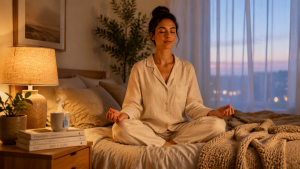
Breathing patterns directly influence your nervous system. The 4-7-8 method (inhale for 4 seconds, hold for 7, exhale for 8) is popular for falling asleep, but for deep sleep specifically, I prefer cyclic sighing: two inhales through the nose (quick inhale, then a longer inhale to fill the lungs fully) followed by a long, slow exhale through the mouth. This pattern activates the parasympathetic nervous system and lowers heart rate variability.
I do three cycles of cyclic sighing right after getting into bed. It takes about 30 seconds and shifts my body into a relaxed state that makes deep sleep more accessible. The mistake most people make: they do the breathing too fast or too shallow. The exhale should be at least twice as long as the inhale. For a step-by-step guide on breathing techniques, see our article on How to Practice Easy Deep Breathing Exercises.
4. Light Exposure: Morning Sunlight and Red Light at Night
Light is the single most powerful external cue for your circadian rhythm. But it's not just about avoiding blue light at night - you need to actively use light to build deep sleep pressure. The concept is called "phase shifting": morning light advances your circadian clock, making you sleepier earlier in the evening, which increases the proportion of deep sleep early in the night.
Morning Sunlight: The Non-Negotiable
Within 30 minutes of waking, get 10-30 minutes of natural sunlight (without sunglasses) to signal your suprachiasmatic nucleus. This triggers the release of cortisol and serotonin, which sets a timer for melatonin production 14-16 hours later. I do this even on cloudy days - the light intensity is still 10,000 lux compared to 500 lux in a typical office. Most people don't realize that looking through a window glass reduces UVB (which is fine) but still passes enough blue light for the circadian effect. The key is to be outside, not just by a window.
If you wake up before sunrise, use a bright light therapy lamp (10,000 lux) for 20-30 minutes. I use a Carex lamp. It made a noticeable difference in my sleep onset and deep sleep within 3 days.
Red Light Therapy at Night
Blue light suppresses melatonin, but red light (wavelengths around 630-670 nm) does not. In fact, red light therapy may stimulate mitochondrial function in the brain and improve sleep. A 2019 study in Photobiomodulation, Photomedicine, and Laser Surgery found that 30 minutes of red light therapy (670 nm) before bed improved sleep quality and increased melatonin levels in athletes.
I use a red light therapy panel (Joovv Mini) for 10 minutes while reading before bed. The experience: it's a warm, calming glow. The downside is cost - panels start at $300. A cheaper alternative: red light bulbs (like the Philips Hue color bulb set to red) or a red reading lamp. They don't have the same intensity as a therapy panel, but they still reduce blue light exposure. I've also tried wearing blue-blocking glasses (Uvex) for 2 hours before bed, and they work well if you can't control your environment.
5. The Bio-Hack Stack: A Practical Framework for Increasing Deep Sleep
Combining multiple techniques produces a synergistic effect. Here's a framework I use, organized by time of day:
- Morning (within 30 min of waking): 15 minutes of outdoor sunlight. If cloudy, use a 10,000 lux lamp. No sunglasses.
- Afternoon (3-4 PM): Avoid caffeine. If you need a pick-me-up, try a short walk outside to get light exposure, which reinforces the circadian signal.
- Evening (2 hours before bed): Dim lights. Switch to red light (bulb or therapy panel). Avoid screens. If you must use a device, enable blue light filter.
- 1 hour before bed: Take magnesium glycinate (200 mg), L-theanine (100 mg), and glycine (3 g) with water. Set thermostat to 65-68°F. Turn on cooling pad if using.
- 30 minutes before bed: Do 3 cycles of cyclic sighing. Then play pink noise at low volume. Use a sleep mask if any light leaks in.
- Bedtime: Lie down. If your mind is racing, try progressive muscle relaxation or the 4-7-8 breathing method.
This stack sounds like a lot, but it takes about 10 minutes of active preparation. The first week, I suggest tracking your sleep with a fitness tracker (even a $30 band) to see what works. The thing nobody tells you: you may see a decrease in deep sleep for the first 2-3 nights as your body adjusts to supplements. Stick with it. After 2 weeks, the increases become stable.
6. Common Mistakes and How to Avoid Them
I've made several errors while optimizing deep sleep. Here are the most common ones and how to dodge them.
- Over-supplementing. Taking too much magnesium glycinate can cause diarrhea; too much glycine leads to grogginess. Start with half the recommended dose and increase slowly.
- Cooling the room too much. Below 60°F increases cortisol and shivering, which fragments sleep. Keep it between 65-68°F.
- Using pink noise at high volume. It can disrupt sleep architecture. Keep it at 40-50 dB - about the level of a quiet conversation.
- Doing breathing exercises too fast. Slow exhales are critical. If you feel dizzy, you're going too fast.
- Expecting instant results. It took 2-3 weeks for my deep sleep to stabilize. Track metrics to see trends, not nightly fluctuations.
7. When to Seek Professional Help
These natural methods work for most people, but if you consistently get less than 30 minutes of deep sleep per night despite optimizing everything, consider consulting a sleep specialist. Conditions like sleep apnea, restless legs syndrome, or chronic pain require medical intervention. I had a friend who tried all the supplements and cooling tech but still felt exhausted - a sleep study revealed severe apnea. A CPAP machine fixed his deep sleep overnight.
Also, if you're on medications (especially antidepressants, beta-blockers, or corticosteroids), they can suppress deep sleep. Talk to your doctor about timing or alternatives. For a broader approach to building sustainable sleep habits, see our guide on How to Build Better Sleep Habits Step by Step.
Summary: Your Deep Sleep Action Plan
To recap, the most effective natural ways to increase deep sleep go beyond room temperature and screen time:
- Targeted supplements: magnesium glycinate, L-theanine, glycine.
- Precision temperature control: 65-68°F room and a cooling mattress pad.
- Audio bio-hacks: pink noise (reliable), binaural beats (experimental).
- Breathing protocols: cyclic sighing before bed.
- Light exposure: morning sunlight and red light at night.
Start with one or two changes, track your sleep for a week, then add more. The goal is not to implement everything at once, but to find what moves the needle for you. For a complete daily routine that incorporates relaxation, check out Your Easy Daily Routine for Deep Relaxation.
Deep sleep is not a luxury - it's a biological necessity. With the right tools and a little patience, you can restore it naturally.