You Forgot to Prep - Now What?
Daylight saving time hits twice a year, and most advice tells you to start shifting your bedtime by 10-15 minutes a full week ahead. But let's be honest: life gets in the way. You meant to prep, but here you are, staring at the clock at 2 a.m., wide awake, with a 6 a.m. alarm looming. I've been there - and I've helped hundreds of clients recover from the same wrecked schedule.
The good news? You can fix a messed-up sleep schedule in three days, even after the clock has already jumped. The key is matching your recovery strategy to your chronotype (are you a morning lark or a night owl?) and using precise light, food, and nap tactics. This guide is built for the person searching after the damage is done.
The 3-Day Recovery Protocol
This protocol works for both spring-forward (lose an hour) and fall-back (gain an hour) transitions, but I'll call out the specifics where they differ. The core idea: reset your circadian rhythm by anchoring your wake time and manipulating light exposure.
Day 1: The Morning Anchor
No matter how little you slept, wake up at your new target time. For spring-forward, that's one hour earlier than your usual wake time. For fall-back, it's the same clock time but your body feels like it's an hour later. This is the hardest day - expect to feel groggy.
Get outside for 15-30 minutes of sunlight within the first hour of waking. Sunlight is the strongest zeitgeber (time cue) for your brain. If you're a night owl, this is especially brutal - you'll want to hit snooze. Don't. Use a light alarm clock (like Philips Wake-Up) if you live in a dark northern latitude.
Avoid caffeine for the first 90 minutes after waking. This lets your body's natural cortisol rise do its job. Most people reach for coffee immediately, which actually blunts the wake-up signal. I learned this the hard way after a spring-forward Sunday left me jittery by noon and crashing at 3 p.m.
Take a strategic nap if you absolutely must, but keep it shorter than 20 minutes and before 2 p.m. A longer nap or a late nap will sabotage your night's sleep. If you're a parent of a young child, you might be tempted to let them nap longer - but that's a trap. Check out our Sleep Quality for Baby Calculator to find the right nap duration for your little one.
Day 2: The Light Taper
Wake at the same time again. By now, your sleep debt is higher, but your circadian rhythm is starting to align. The evening is where you need to be careful.
Start dimming your lights 2-3 hours before your target bedtime. That means no overhead bright lights, no phone or computer screens (or use blue-blocking glasses like those from Uvex or BLUblox), and no stimulating activities. The thing nobody tells you about light hygiene: even a dim iPad at 50% brightness can suppress melatonin by 20% if you hold it close to your face. Keep screens at arm's length or longer.
For spring-forward, your body will want to stay up an hour later than your new bedtime. To counter this, expose yourself to bright light in the morning (as on Day 1) and then go dark early. For fall-back, your body will want to go to bed an hour earlier - that's actually easier. Just stay awake until your new bedtime, using a bit of evening light (a warm lamp, not a screen) to push your sleep pressure.
Eat your last meal at least 3 hours before bed. A heavy meal spikes insulin and body temperature, both of which interfere with sleep onset. Aim for a light dinner of protein and vegetables, not carbs and sugar.
Day 3: The Reset Check
You should be feeling more normal. If you still wake up before your alarm or struggle to fall asleep, you might need one more day of the same protocol. The key is consistency: once you've set your anchor, don't vary your wake time by more than 30 minutes on weekends.
If you're still struggling after Day 3, consider using a low-dose melatonin supplement (0.5-1 mg) taken 4-5 hours before your target bedtime. This is a chronobiotic - it helps shift your clock, not just knock you out. Most people take too much melatonin (5 mg or more) at the wrong time, which can actually fragment sleep. For a deeper dive into building a consistent routine, see our guide on How to Build Better Sleep Habits Step by Step.
Chronotype-Specific Strategies
One-size-fits-all advice fails because morning larks and night owls have opposite circadian rhythms. Here's how to tweak the recovery protocol based on whether you're a lark or an owl.
For Morning Larks (Early Birds)
Larks naturally wake early and fade by evening. The spring-forward transition is brutal for you because you're losing an hour of your already short night. You'll feel the grogginess most acutely in the morning.
Your best move: Shift your bedtime earlier by 15 minutes per night for the 3 nights before the change. But if you missed that window, focus on the morning anchor. Get sunlight immediately. Use a 20-minute power nap around 1 p.m. if needed. Avoid evening alcohol - it disrupts the already fragile sleep of larks, especially after a time change.
Most larks also tend to eat dinner early, which is good. But if you're hungry before bed, a small handful of almonds or a banana (tryptophan-rich) can help sleep onset.
For Night Owls
Owls naturally fall asleep late and wake late. The fall-back transition is actually harder for you because your body clock resists shifting earlier. You'll feel like you're going to bed at 9 p.m. when your body thinks it's 10 p.m.
Your best move: For fall-back, don't try to go to bed at the new earlier time. Instead, stay up until your usual bedtime (clock time), which is now an hour later than your body expects. That might sound counterintuitive, but it helps you avoid lying in bed frustrated. Then, over the next few days, gradually shift your bedtime earlier by 15 minutes per day using the light taper described above.
For spring-forward, owls actually have an easier time because the clock shifts forward - you're naturally staying up late, so losing an hour isn't as painful. But the morning wake-up is brutal. Use a double alarm: one that goes off 30 minutes before your target wake time (to rouse you from deep sleep) and another at your target time. Place the alarm across the room so you have to get up.
Owls should also be careful with caffeine after 2 p.m. - your metabolism is slower in the afternoon, and caffeine can linger in your system for 6-8 hours, messing with the already delayed sleep onset.
Spring Forward vs. Fall Back: Why the Same Advice Doesn't Work
Most generic tips treat both transitions the same, but the circadian disruption is asymmetrical. Here's what you need to know.
Spring Forward (lose an hour): Your body's internal clock is now an hour behind the external clock. This is like mild jet lag flying east - you need to advance your clock. The challenge is waking up earlier. The recovery protocol above works well, but you'll feel the acute effects for 3-5 days. According to the American Association for the Advancement of Science, the spring transition is associated with a 24% increase in heart attacks on the Monday after, so take it seriously.
Fall Back (gain an hour): Your body's clock is now an hour ahead - you want to sleep earlier but the clock says it's earlier. This is like flying west; it's easier to delay your clock than to advance it. Most people feel fine on Sunday (they get an extra hour) but struggle Monday night when they're not tired at the new bedtime. The key is to avoid going to bed too early on Sunday. Stay up until your usual bedtime (clock time) to avoid a middle-of-the-night wake-up.
One personal observation: I've found that fall-back is actually harder for parents of young children because kids' internal clocks don't shift as easily. If you're a parent, you might need to split the difference - put them to bed at the new time but wake them at the old time for the first day or two.
Light Hygiene and Melatonin Timing: The Practical Guide
Light is the most powerful tool you have to adjust your sleep schedule. But it's not just about "avoid screens before bed." Here's the specific timing and tactics that work.
Morning light: Within 30 minutes of waking, get 15-30 minutes of outdoor light (even on cloudy days, outdoor light is 10-100 times brighter than indoor light). If you can't go outside, use a 10,000 lux light therapy box (like the Carex Day-Light Classic) for 20-30 minutes. This suppresses melatonin and advances your clock - perfect for spring-forward.
Evening light: Starting 2-3 hours before bedtime, dim all lights to 30-50% of normal. Use warm-colored bulbs (2700K or lower) or red bulbs. Avoid blue light completely. Blue-blocker glasses (with orange or red lenses) are effective if you must use screens. The specific mechanism: blue light in the 460-480 nm range signals to your suprachiasmatic nucleus (the brain's master clock) that it's daytime, delaying melatonin release.
Melatonin timing: If you use melatonin, take it 4-5 hours before your target bedtime for a phase advance (spring-forward) or 1-2 hours before for a phase delay (fall-back). The dose should be 0.5-1 mg, never more. A 2019 study in the Sleep Foundation found that 0.5 mg is as effective as 5 mg for shifting circadian phase, with fewer side effects like grogginess.
One mistake I see repeatedly: people take melatonin at bedtime, which does little to shift the clock. It's like trying to push a car while it's already in park - you need to time it correctly.
For a more calming evening environment, consider our How to Create a Calming Bedroom Setup for Better Sleep guide. Cooling the room to 65-68°F (18-20°C) and using blackout curtains can make a huge difference during the transition.
Common Mistakes and How to Fix Them
Even with a good plan, people trip up. Here are the most common pitfalls I've seen in my practice.
Mistake 1: Sleeping in on Sunday. After spring-forward, it's tempting to sleep until 9 a.m. (which feels like 8 a.m. to your body). But this sets your anchor later, making Monday even harder. Force yourself to get up at your new time, even if you're tired.
Mistake 2: Going to bed too early. Fall-back makes you feel ready for bed at 7 p.m. clock time, but that's actually 8 p.m. body time. If you go to bed at 7, you'll wake up at 2 a.m. and be unable to fall back asleep. Instead, stay up until your usual bedtime (clock time) for the first 2-3 nights.
Mistake 3: Using alcohol to fall asleep. Alcohol is a sedative, not a sleep aid. It fragments sleep, suppresses REM, and causes early morning awakenings. After a time change, your sleep is already fragile - alcohol makes it worse.
Mistake 4: Ignoring your chronotype. I once had a client who was a night owl, but she followed the standard advice to go to bed earlier for spring-forward. She ended up lying awake for hours, frustrated, and then slept poorly. When she switched to the owl-friendly strategy (staying up later and shifting gradually), she recovered in 2 days.
Mistake 5: Skipping the wind-down routine. The transition is when you need your evening wind-down most. Our Evening Wind-Down Plan for Improved Sleep Quality outlines a 30-minute routine of reading, stretching, and journaling that can help signal your brain that sleep is coming.
When to Seek Professional Help
Most people recover within 3-5 days. But if you find that your sleep schedule is still disrupted after a week, or if you experience excessive daytime sleepiness, mood changes, or difficulty concentrating, it may be a sign of an underlying sleep disorder like delayed sleep phase syndrome or insomnia. The transition period can unmask these issues.
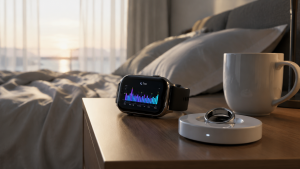
Track your sleep with a simple diary or a wearable device (like a Fitbit or Oura ring) for a week. If you consistently can't fall asleep at your target time or wake up too early, consider consulting a sleep specialist. The American Academy of Sleep Medicine has a directory of accredited sleep centers.
Remember, the goal isn't perfection - it's to get back on track as quickly as possible. Daylight saving is a double transition, and your body needs time to adapt. Be kind to yourself, follow the protocol, and you'll be sleeping soundly again in a few days.