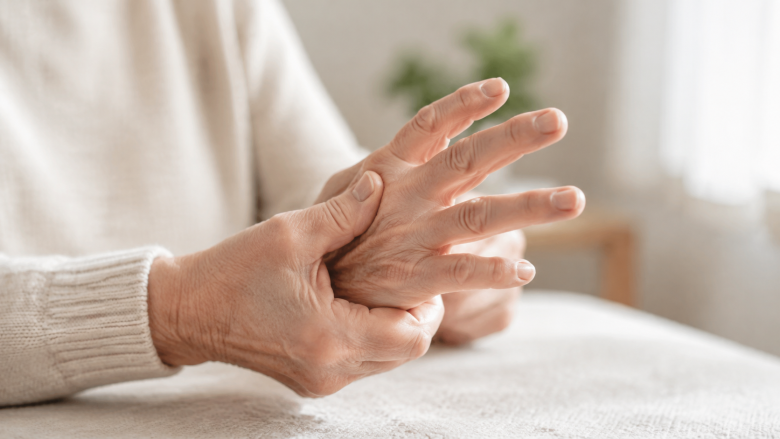
If you have arthritis in your hands, you already know the struggle: mornings when your fingers feel locked, the ache after gripping a shopping bag, the fear that every new twinge means more damage. The good news is that gentle exercise can genuinely help. The tricky part is knowing which movements protect your joints and which ones make things worse.
Here is the short answer: the best gentle exercises for arthritic hands are range-of-motion movements done slowly and pain-free, like finger bends, thumb touches, and wrist circles. Avoid forceful gripping, tight pinching, and stretching through sharp pain. Use heat before exercise and ice afterward. And when your hands are in a flare, rest them first, then move gently.
This guide goes beyond the standard exercise list. It covers what not to do, how to calm a flare-up, how to protect your joints from deformation, and how to fit hand exercises into your real daily life.
Why Exercise Helps Arthritic Hands (and Why It Sometimes Hurts)
Arthritis in the hands usually means osteoarthritis (wear-and-tear) or rheumatoid arthritis (an autoimmune condition). Both cause pain, stiffness, and reduced mobility. Movement helps because it keeps synovial fluid, the natural joint lubricant, moving. It also maintains muscle strength around the joints, which takes pressure off them.
But here is the thing nobody tells you: more movement is not always better. For arthritic hands, the goal is not to stretch until it burns or to build grip strength with heavy resistance. The goal is to keep joints mobile without provoking inflammation.
When I first started working with clients who had hand arthritis, I made the mistake of recommending a standard "hand workout" that included squeezing a stress ball. Within a week, one client reported increased pain and swelling in her thumb joint. The problem? Squeezing forces the thumb into a flexed, loaded position - exactly the pattern that aggravates the base-of-thumb joint, which is the most common site of hand osteoarthritis.
Since then, I have learned to think of hand exercises as a gentle morning routine, not a workout. The best exercises are slow, deliberate, and always under your pain threshold. If a movement makes you wince, stop. That is not weakness; it is joint protection.
The 5 Best Gentle Exercises for Arthritis in Hands
Below are the five exercises I recommend most often. They are simple, require no equipment, and can be done while sitting at a desk or watching TV. Do them once or twice a day, but never through sharp pain.
1. Finger Bends (DIP and PIP Joints)
Hold your hand up with fingers straight and relaxed. Slowly curl your fingertips toward the top of your palm, bending only at the middle and end joints of your fingers. Keep the big knuckles (MCP joints) relatively straight. Hold for 3 seconds, then straighten gently. Repeat 5-10 times per hand.
This exercise targets the small joints that often stiffen first in arthritis. The trick is to move slowly and not force the bend. You should feel a gentle stretch, not a painful pull.
2. Thumb Touches (Opposition)
Touch your thumb to the tip of each finger on the same hand, one at a time. Go slowly, making a circle with each touch. If you cannot reach the pinky, reach as far as you comfortably can. Repeat 5 times per hand.
This movement preserves the thumb's mobility, which is crucial for pinching, gripping, and daily tasks like buttoning a shirt. A common mistake is rushing through this exercise or using the other hand to force the thumb. Never force a joint into a position it resists.
3. Wrist Flexion and Extension Stretch
Extend one arm in front of you with your palm down. Use the other hand to gently press your fingers downward until you feel a mild stretch in the wrist and forearm. Hold for 10-15 seconds. Then flip your palm up and gently press the fingers backward. Repeat 2-3 times per wrist.
Your wrist supports every movement your fingers make. Keeping it flexible reduces strain on the hand. The key word is gentle - if you feel a pulling sensation at the wrist joint itself, you are pressing too hard.
4. Full Fist
Start with your fingers straight. Slowly make a fist, wrapping your thumb around the outside of your fingers (not tucked under). Do not squeeze tightly. Hold for 3 seconds, then release and spread your fingers wide. Repeat 5-10 times per hand.
This exercise improves overall finger range of motion. The "spread wide" part is just as important as the fist - it stretches the small muscles between your fingers.
5. Finger Lifts
Rest your hand flat on a table, palm down. Lift one finger at a time as high as you can, keeping the others flat. Repeat for all five fingers, then switch hands.
Finger lifts strengthen the intrinsic muscles and improve independent finger control. If a finger trembles or refuses to lift, that is a sign of weakness, not injury. Work within what you can do and build slowly.
Important: These exercises should never cause sharp pain. A mild stretch or mild discomfort is okay. If pain increases during or after exercise, reduce the number of repetitions, decrease the range of motion, or take a day off.
What Not to Do with Arthritic Hands (The Critical "Skip" List)
Every arthritis article tells you what to do. Very few tell you what to avoid. This is the gap that matters most, because the wrong movement can undo weeks of careful progress in a single afternoon.
Avoid Tight Gripping
Squeezing a stress ball, gripping a pen hard, or carrying heavy bags with your fingers can overload the small joints. The muscles in your hand are small, and the joints are easily stressed. When you need to carry something, use your whole palm or a shoulder bag instead of hooking your fingers through a handle.
Avoid Repetitive Pinching
Pinching with your thumb and index finger is one of the most stressful activities for the base-of-thumb joint. Activities like picking up coins, snapping buttons, or holding a needle for long periods can aggravate arthritis. If you must pinch, take frequent breaks. Better yet, use a tool - a button hook, a pinch gripper, or even a simple pair of tweezers - to reduce the load.
Avoid Forceful Bends
Do not use your other hand to push a stiff finger further. Do not do "knuckle cracking" or aggressive stretching. Forced bending can tear ligaments and worsen joint instability. In rheumatoid arthritis, it can contribute to the characteristic deformities that many people fear.
Avoid Prolonged Static Postures
Holding your hands in one position for a long time - gripping a steering wheel, hovering over a keyboard, or holding a book - can cause stiffness and pain. This is not about avoiding these activities entirely, but about taking micro-breaks every 15-20 minutes to open and close your hands.
Avoid Heavy Resistance Training
Hand grippers, heavy therapy putty, and resistance bands for the fingers are not your friends when you have active arthritis. They can increase inflammation and cause joint damage. Light putty (very low resistance) might be okay for strengthening, but only if you have no pain during and after use. If you are unsure, skip it.
How to Calm Down Arthritis in Hands: A Flare-Up Protocol
Flare-ups happen. Your hands feel hot, swollen, and painful, and the last thing you want to do is exercise. So let us talk about what actually works to calm things down.
Phase 1: Rest (First 24-48 Hours)
During an acute flare, the most important thing is to stop doing the activities that caused it. This is not a time for exercise. Rest your hands as much as possible, but do not immobilize them completely - gently move them through a pain-free range of motion once or twice a day just to prevent stiffness.
Phase 2: Ice or Heat - Which One?
Heat is a wonderful tool before gentle exercise or in the morning when stiffness is at its worst. It relaxes muscles and increases blood flow. Use a warm paraffin wax bath, a warm towel, or a heating pad for 10-15 minutes. Heat alone should never be used on an already swollen and hot joint.
Ice is for acute pain and swelling. After exercise or a long day of hand use, wrap a gel pack or a bag of frozen peas in a thin towel and apply for 10-15 minutes. Ice reduces inflammation and numbs pain. Never apply ice directly to the skin and never leave it on for more than 20 minutes.
In practice, I tell people: use heat before activity, ice after. If you wake up with stiff hands, warm them up first. If you come home from a day of gardening with aching, swollen joints, ice them.
Phase 3: Gentle Movement Within Your Pain Tolerance
As the flare begins to subside, start with the exercises above but reduce the range of motion. If full finger bends hurt, do half-bends. If wrist stretches are too much, just do wrist circles. The goal is to maintain mobility, not to push through the flare.
What if pain is severe and does not improve with rest and ice? Consult a healthcare professional. Over-the-counter anti-inflammatories (if approved by your doctor) can help, but they are not a long-term solution.
For a deeper look at incorporating gentle movement into your day even when you are not feeling great, see our article about adding gentle stretches to your daily breaks.
How to Stop Fingers from Deforming with Arthritis
The fear of deformed hands is real. Many people with arthritis worry about the lumps, misalignments, and crooked fingers they have seen in older relatives. The good news: you are not destined to develop severe deformities. You can do a lot to preserve your hand shape and function.
Understand Why Deformities Happen
In osteoarthritis, bone spurs (Heberden's nodes at the end joints and Bouchard's nodes at the middle joints) form as the cartilage wears away. These are not truly "deformities" in the destructive sense - they are bony growths that can make joints look swollen and knobby. They are usually not painful after they form.
In rheumatoid arthritis, deformities happen when inflamed tendons and joint linings destroy the supporting ligaments. This can lead to fingers drifting sideways (ulnar drift) or snapping into a bent position (swan-neck or boutonniere deformities). These are more serious and require medical management, including medications that slow the disease.
Joint Protection Is Your Best Weapon
You can directly reduce the stress that leads to deformities by following joint-protection principles:
- Use larger joints instead of smaller ones. For example, carry a bag on your shoulder or forearm rather than with your fingers.
- Spread the load across your whole hand. When lifting a pot, use both hands and keep your wrists straight.
- Avoid tight, sustained grips. Hold items loosely whenever possible.
- Use tools with thick, padded grips. This makes handles easier to hold without squeezing.
- Keep your hands in neutral positions. When sleeping, try not to curl your fingers tightly.
Specific Exercises That Help Extend, Not Flex
Deformities often happen when the flexor muscles (which bend the fingers) overpower the extensor muscles (which straighten them). So make sure your exercise routine includes extension movements, not just flexion movements.
The finger lifts exercise above is excellent for extension. Another great one is the "table stretch": place your hand palm-down on a table, with your fingers spread. Gently press each finger flat against the table, feeling a stretch in the top of the hand. Hold for 5-10 seconds.
If you have rheumatoid arthritis and notice that your fingers are starting to drift, talk to your rheumatologist about custom splints. Wearing a splint at night can keep joints aligned and prevent mild deformities from progressing.
When to Exercise: Morning Stiffness vs. Evening Pain
Timing matters more than most people think. The best time to exercise depends on your symptoms.
Morning: Stiffness Dominates
If your hands are stiffest in the morning, a gentle exercise routine right after waking up - or after a warm shower - can be transformative. Heat before exercise loosens the tissues. Start with gentle fist and straighten movements, then progress to the finger bends and thumb touches. Keep it short: 5 minutes is enough.
Midday: Use Movement Breaks
During the day, your hands are likely performing work. The issue is not too little exercise, but too much repeated stress. Micro-breaks are key. Every 20-30 minutes, shake out your hands, make a gentle fist, and straighten your fingers a few times. These micro-movements counteract stiffness from static postures.
Evening: Pain and Swelling
After a long day, your hands may feel tired and achy. This is not a great time for a full exercise session if you have pain. Instead, do very gentle wrist circles and finger wiggles. Ice afterward if there is swelling. Evening is also a good time for paraffin wax, which delivers heat deep into the joints and is supremely soothing.
For a broader approach to pairing movement with relaxation, consider the principles in our daily routine for light exercise and calm breathing.
Real-World Integration: Protecting Your Hands in Daily Life
Exercise is only part of the story. The other part is how you use your hands in everyday activities. Here are practical modifications that reduce pain and protect joints.
Kitchen, Home, and Office Adjustments
In the kitchen, use a rocker knife for cutting - it requires less grip and pushes down with your palm. Open jars with a rubber grip or a jar opener. Use an electric can opener. In the garden, use tools with long handles that you can grip with your whole hand, and wear padded gloves.
At your desk, use a keyboard with light-key switches and a vertical mouse that keeps your wrist in a neutral position. An ergonomic pen with a thick grip reduces pinch force while writing. When using a smartphone, hold it with both hands, not just one, and use voice-to-text when your thumbs ache.
Adaptive Tools Are Not Defeats
Many people resist using adaptive tools because they feel they are "giving in." But think of a padded grip or a jar opener as a tool, not a crutch. You would not chop wood without a handle on the axe. Using tools that reduce stress on your joints is simply smart.
When to See a Professional
If you have persistent hand pain that limits your daily activities, or if you notice new swelling, redness, or deformities, see a doctor. A hand therapist (an occupational therapist or physiotherapist) can create a custom exercise program and prescribe splints.
A Simple Hand-Health Checklist for Every Day
Here is a practical checklist that combines everything from this article. It is designed to be simple enough to follow even on busy days.
- Morning: Apply heat for 5-10 minutes. Do the 5 exercises above, slowly and gently, for about 5 minutes.
- All day: Take micro-breaks every 20-30 minutes to move your hands. Avoid tight gripping and repetitive pinching.
- Mealtimes and chores: Use adaptive tools, thick grips, and carry things across your forearm instead of with your fingers.
- After activity: If your hands feel hot or swollen, apply ice for 10-15 minutes.
- Evening: If your hands are stiff, do a few slow wrist circles and finger bends. Consider paraffin wax or a warm towel wrap.
- Flare-up days: Rest first. Do no exercises that cause pain. Gently move only within pain-free limits. Use ice if swollen, heat if stiff.
The golden rule: Pain is the boss. If an exercise or activity increases your pain, stop. If it produces a mild stretch and no sharp jolt, it is probably safe. Your hands are telling you a story every day. Learn to listen.
Putting It All Together: Your Gentle Hand-Health Journey
Living with hand arthritis is a daily negotiation. Some days you will wake up with supple hands that glide through exercises. Other days you will feel like you are moving through glue.
The mistake is to expect a linear path. Progress comes slowly, and setbacks are normal. The point of gentle exercise is not to cure arthritis - it is to keep your hands as functional and comfortable as possible for as long as possible.
Start small. Commit to one exercise session tomorrow morning, just 5 minutes. Then add another the next day. Over time, you will find a rhythm that works for your hands and your life. And remember, the best exercise is the one you actually do.
If you are curious about how even gentle movement affects your energy balance, you can explore a tool like our exercise calories per 45 minutes calculator - though for hand exercises, the calories burned are modest, the benefits for joint health are what really matter.